
































































Wyoming’s Nuclear Renaissance: Bill Gates’ Reactor Aims to Power AI, and Raises a Few Big Questions
Terra Power’s advanced reactor in Kemmerer aims to power AI-hungry data centers and revive a coal town, but raises waste, mining and political questions.
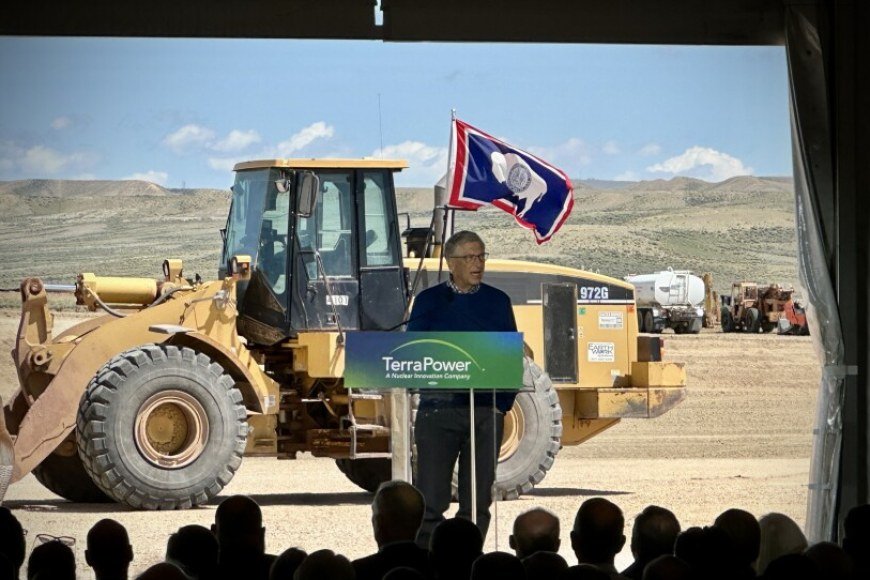
There’s a new kind of construction dust whipping across Kemmerer, Wyo., and it isn’t coal, though the old Naughton plant sits smugly nearby. Terra Power, the company co-founded by Bill Gates, has started building what would be one of just a handful of new U.S. reactors this century, pitching it as an “advanced” design that could be quicker to build and safer to run.
Part of the urgency here is not nostalgia for nuclear romance but a math problem: the International Energy Agency projects U.S. data centers may need roughly 130% more power by 2030, thanks in part to the AI boom. Big tech and federal money are lining up behind reactors as one tool to meet that demand, Terra Power even has deals with Meta to power some data centers directly.
The Nuclear Regulatory Commission gave final approval in March after about five years of studies, and Kemmerer won the competitive bid over other western towns. Much of the new plant will be underground and, rather than water, it will use liquid sodium metal to cool the reactor, a detail that makes it sound like someone replaced the cooling tower with a sci-fi sous-vide.
Money and politics are tangled in the pipes. The Department of Energy pilot that enabled the project started under the previous administration, and the Bipartisan Infrastructure Law later covered roughly half the construction cost, about $2 billion. That makes for the neatest thing about modern energy projects: they survive elections but not easy explanations.
Not everyone is cheering. Environmental and community groups point to a long western history of abandoned uranium mines and radioactive impacts on Indigenous lands. Utah and other Rocky Mountain states are also competing to become DOE “nuclear hubs” where fuel could be enriched, recycled and stored, plans that worry local advocates who point to proximity to the shrinking Great Salt Lake and lingering cleanup questions.
Terra Power says spent fuel will remain on site until a permanent federal repository is approved and that advanced designs produce less waste than older reactors. Those assurances matter to Kemmerer, a former coal-exporting town eager for jobs: the project promises hundreds of skilled positions, and the nearby coal plant will even keep some generators running after partial conversion to natural gas.
So here’s the neat, slightly ironic twist: nuclear is being asked to solve one very modern problem, the power appetite of AI and data centers, while stirring up three old ones: waste storage, uranium-era scars, and the usual political dodge-ball over taxpayer support. If it all works and the reactor is online by 2031, it could light up nearly half a million homes. If it doesn’t, at least the wind will still be doing its thing over Kemmerer.
The future arriving in Wyoming is part techno-optimism, part economic rescue plan, and part reminder that new technology often trades one set of headaches for another. That’s progress, messy, expensive and oddly hopeful, wrapped in a flag that’s probably getting a good laugh from the Wyoming wind.
What's Your Reaction?
 Like
0
Like
0
 Dislike
0
Dislike
0
 Love
0
Love
0
 Funny
0
Funny
0
 Angry
0
Angry
0
 Sad
0
Sad
0
 Wow
0
Wow
0