















Venice Biennale’s Glitchy Update: One Fix, Three New Bug Reports
The Venice Biennale replaced its late curator with her team, a practical fix that still left the show contending with a jury resignation, a controversial Russian return, and an unconventional U.S. pavilion. Previews start this week; the public opening is Saturday.
Venice is getting ready for its usual spring drama, gondolas, gelato, and an international art show that somehow runs on equal parts genius and chaos. This year feels like a software update gone slightly sideways: the Biennale patched a leadership hole after the curator’s sudden death, but the exhibition still boots up with three major error messages blinking red.
Curator Koyo Kouoh, an influential figure who planned the exhibition titled “In Minor Keys,” died last year soon after a terminal diagnosis. Organizers handed the project to her collaborators, a practical, human workaround that kept the show moving. The team that finished her outline includes curators Gabe Beckhurst Feijoo, Marie Hélène Pereira and Rasha Salti, plus advisers who helped with the catalog and other logistics. It’s designed to keep Kouoh’s voice in the room even if she’s not there to speak for it.
That human patch fixed a leadership gap, but it didn’t fix everything. The five-member international prize jury quit en masse after controversy over a decision to exclude artists from countries whose leaders face International Criminal Court probes, and after threats of legal action from one national pavilion. With no jury, the Biennale is replacing jury prizes with visitor-voted “popularity awards”, imagine Oscars decided by the closest thing to a boatload of tourists with free time and strong opinions.
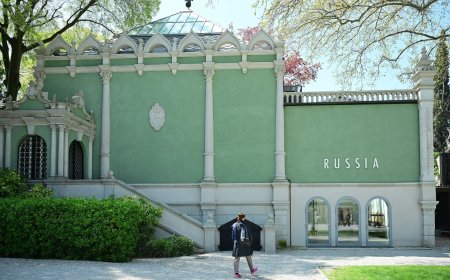
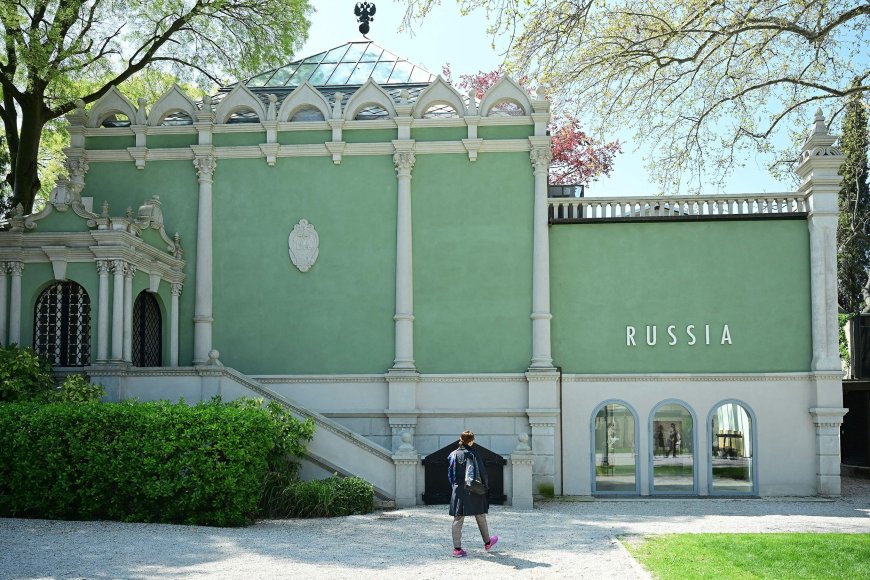
Another problem pinged when Russia turned up on the pavilion list. The country hadn’t mounted a proper Russian pavilion since 2019, and its return, a group show opening only for the press preview, triggered angry reactions, inspections by Italian authorities, and a warning from the European Union about suspended funding. Artists and curators on both sides of the aisle called it ill-timed at best and a strategic provocation at worst; protests are expected.
If you thought that was the last notification, the U.S. pavilion delivered its own notification bubble. The State Department changed its usual selection process, a fiscal sponsor dropped out, and a commissioner with an unconventional résumé, including running a pet-food shop and involvement with animal charities, stepped in. The artist chosen, Alma Allen, lives in Mexico and is a self-taught sculptor who isn’t a typical Biennale “institutional” pick. The curator and commissioner reportedly didn’t visit his studio, and the whole selection has been described as unorthodox, which, in Venice, reads as both scandalous and oddly fitting.
Through it all, questions remain about how closely the final exhibition will reflect Kouoh’s original vision. She had months, not years, to outline the show, and some former curators say that’s not usually enough time to finish a Biennale plan. The collaborators say they worked closely with her late in the process, but audiences will be the final arbiters: does the exhibition feel like a tribute, a faithful realization, or something else entirely?
So the Biennale opens its previews to the press this week and to the public on Saturday, with jury-less prizes, a contested Russian presence, and an American pavilion that looks like a political pop-up. Think of it as an app update: it fixed the obvious bug, but left three new quirks in the changelog, and Venice is about to watch what happens when that patch goes live.
What's Your Reaction?
 Like
0
Like
0
 Dislike
0
Dislike
0
 Love
0
Love
0
 Funny
0
Funny
0
 Angry
0
Angry
0
 Sad
0
Sad
0
 Wow
0
Wow
0