










































Supreme Court Turns Racial Gerrymandering Into a Courtroom Whodunit
The Supreme Court's Louisiana v. Callais ruling requires proof of intentional discrimination to challenge redistricting, nullifying a majority-Black district and raising the bar for voting-rights claims as modern discrimination grows subtler.
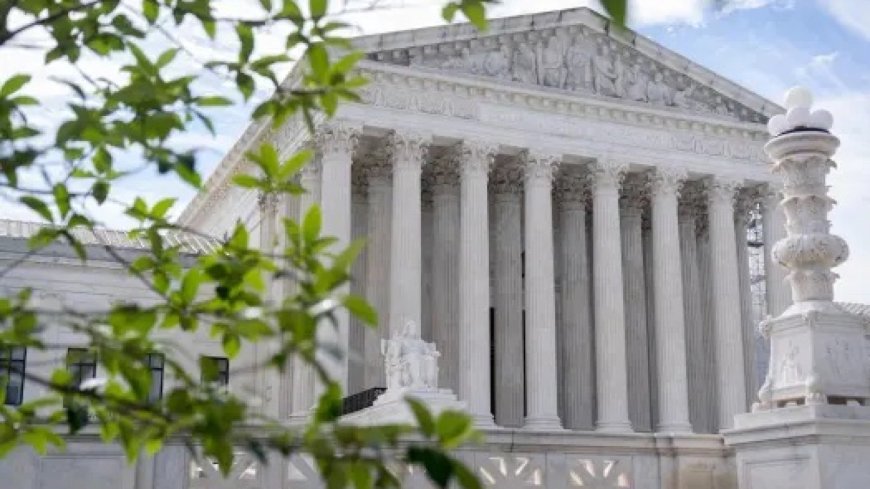
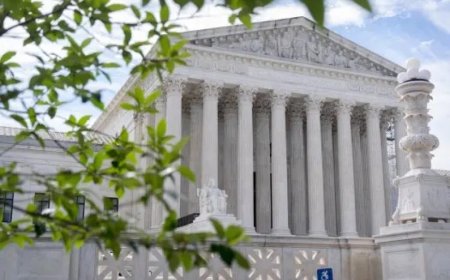
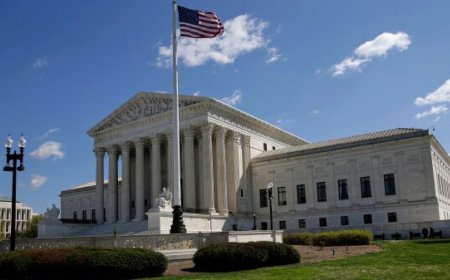
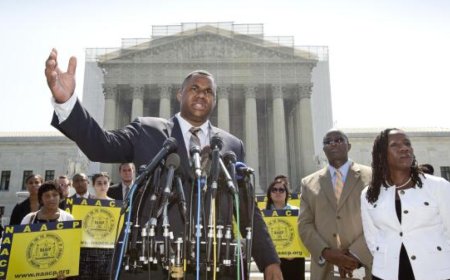
The Supreme Court just decided to make voting-rights litigation feel a lot more like an Agatha Christie novel and a lot less like straightforward democracy. In Louisiana v. Callais, the conservative majority, led by Justice Samuel A. Alito, said challengers must show that mapmakers “intentionally” disadvantaged a racial group, and a federal majority-Black congressional district in Louisiana was wiped off the board as a result.
That’s a big change to how courts sniff out discrimination. The Voting Rights Act was Congress’s attempt, in 1965, to finally pry open Southern politics to Black voters after decades of explicit exclusion. Back then, racism was often naked and loud; today it tends to dress up in bureaucratic suits and call it “partisan strategy.” The new rule asks judges to catch that suit in the act of pulling on a white hood.
Justice Elena Kagan’s dissent was blunt: asking for clear proof of motive is “well-nigh impossible.” She’s not being melodramatic. Intent rarely leaves a neatly labeled receipt. Lawyers must now hunt for traces of discriminatory purpose in legislative files, emails and behavior, fine work for investigators, infuriating work for people trying to protect voting access.
This isn’t the first time the Court has balked at statistical evidence. In 1987 the justices denied relief to Warren McCleskey despite a study showing stark racial disparities in death-penalty sentencing in Georgia; a similar skepticism shows up in jury-selection law, where Batson requires proof that a prosecutor purposefully struck jurors because of race. In other words, numbers can be persuasive at cocktail parties but less persuasive from the bench.
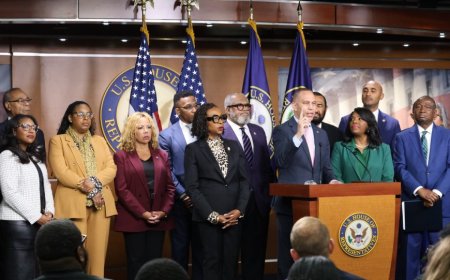
The ruling fits a broader trend toward a so-called “colorblind” Constitution: last year the Court ended race-conscious college admissions, and the current political environment has pushed moves to reduce diversity and equity initiatives. Some conservatives, including a few Black Republicans, framed the decision as recognition of progress, arguing that race-based districts are obsolete. Others warn that dismantling remedies that forced fairer maps will let patterned exclusion slip back in under a partisan disguise.
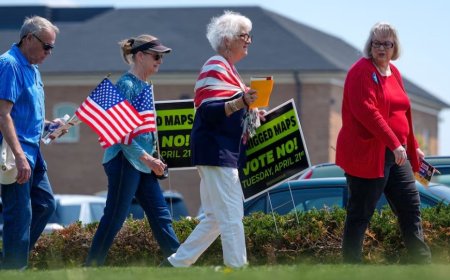
Scholars call this the “problem of entanglement”: are maps racist, or merely partisan? Justice Alito warned against litigants “dressing” partisan gerrymanders in racial garb, while critics say that’s exactly how modern discrimination hides. The immediate consequences are practical: states are already considering whether to redraw maps, and the decision could reshape political power just as the midterms approach.
So the new rule is set: to prove racial bias you must prove intent, and intent is an elusive, private thing that systems are very good at hiding. In short, if you’re trying to catch discrimination today, bring better evidence, better forensic skills, and a healthy skepticism of anyone who claims maps are merely about politics; the maps have learned to play dress-up.
What's Your Reaction?
 Like
0
Like
0
 Dislike
0
Dislike
0
 Love
0
Love
0
 Funny
0
Funny
0
 Angry
0
Angry
0
 Sad
0
Sad
0
 Wow
0
Wow
0