




































































One in five councils now ban swearing, PSPOs turn everyday acts into fines
Campaigners saying public spaces protection orders also being used to criminalise wide range of everyday activitiesOne in five local councils have banned swearing under new “busybody” orders, up from one in 20 councils in 2022.A new report by the Campaign for Freedom in Everyday Life has found that
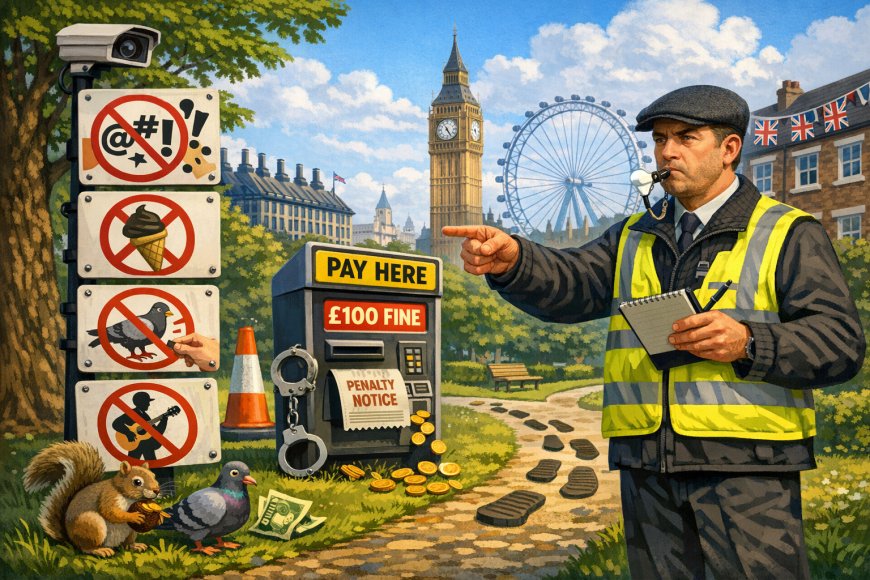
If you thought the local council’s main job was potholes and planning applications, think again. One in five councils in England and Wales now have bans on swearing under so-called public spaces protection orders (PSPOs), up from one in 20 in 2022, and that’s just the start of a long list of oddly specific prohibitions.
PSPOs were designed to tackle serious anti-social behaviour. Instead, many councils have quietly started using them to police everyday life. “Councils have introduced a swathe of bizarre bans that will turn ordinary people into unwitting criminals,” says Josie Appleton, director of the Campaign for Freedom in Everyday Life. The orders allow councils to ban any activity they judge to have a “detrimental effect on the quality of life,” and, alarmingly for anyone who likes spontaneity, can be brought in by a single unelected council officer without public consultation or full council assent.
A freedom-of-information sweep of 319 councils found 297 responses; 271 (91%) of those had at least one PSPO in place. Councils introduced 1,268 new orders in total, each of which can contain up to 30 individual restrictions. Thirteen councils went so far as to restrict feeding birds, a measure that has already led to an arrest in Harrow this year.
Penalties are climbing too. PSPO fines hit 25,000 in 2025, and campaigners warn 75% of those penalties are issued by private enforcement companies that are paid per fine, giving them an incentive to hand out as many as possible. Fines are set to rise from £100 to £500 if the crime and policing bill completes its passage through parliament. Peers in the House of Lords voted to ban fining for profit for PSPOs in three successive votes, but the government rejected those amendments while saying it will tweak statutory guidance.
The bans read like a catalogue of civic overreach. Guildford bans “intentionally shouting or screaming.” Torbay has banned picking up rocks. Richmond upon Thames and Rugby forbid picking up stones, soil or turf, and Rugby even outlaws foraging for blackberries. Meanwhile, activities communities welcome are sometimes treated as offences: in Bury 17-year-old Britain’s Got Talent contestant Charlie Wilson was handcuffed and issued a penalty notice for busking, after crowds gathered to watch. “Everyone’s enjoying it,” he told officers. “To cheer people up, is that a crime now?”
Campaigners warn that many orders give enormous discretion to individual officers and criminalise vague behaviours such as causing “annoyance.” “Several councils have criminalised causing ‘annoyance’, a standard so subjective it could apply to almost any behaviour an officer finds disagreeable,” Appleton says. Examples cited include Gosport’s ban on sitting or loitering “in a manner causing or likely to cause harassment, alarm, distress, nuisance or annoyance to any person,” and Lancaster’s rule that groups of two or more must not allow “their actions to cause annoyance” to anyone nearby. Lancaster’s spokesperson insists the council’s approach is “always proportionate” and that “swearing or shouting are not offences in themselves and action is only taken where behaviour causes annoyance, alarm or distress to others.”
The result is a patchwork of small-scale bans and rising fines that can turn ordinary, spontaneous moments, cheering a street performer, picking up a pebble, or deciding that blackberries are fair game, into inadvertent offences. Whether the cure for minor public nuisances is a hefty fine or simply better guidance and democratic oversight is the question now being asked at town halls and in parliament. In the meantime, maybe think twice before picking up a stone, or at least keep your language PG-rated around the council offices.
What's Your Reaction?
 Like
0
Like
0
 Dislike
0
Dislike
0
 Love
0
Love
0
 Funny
0
Funny
0
 Angry
0
Angry
0
 Sad
0
Sad
0
 Wow
0
Wow
0