



























































Judge Asks DOJ: Will You Oppose Trump’s $10 Billion IRS Lawsuit, or Just Nod?
A federal judge has ordered the Justice Department to explain whether it intends to contest President Trump’s $10 billion lawsuit against the I.R.S. over the disclosure of his tax returns.
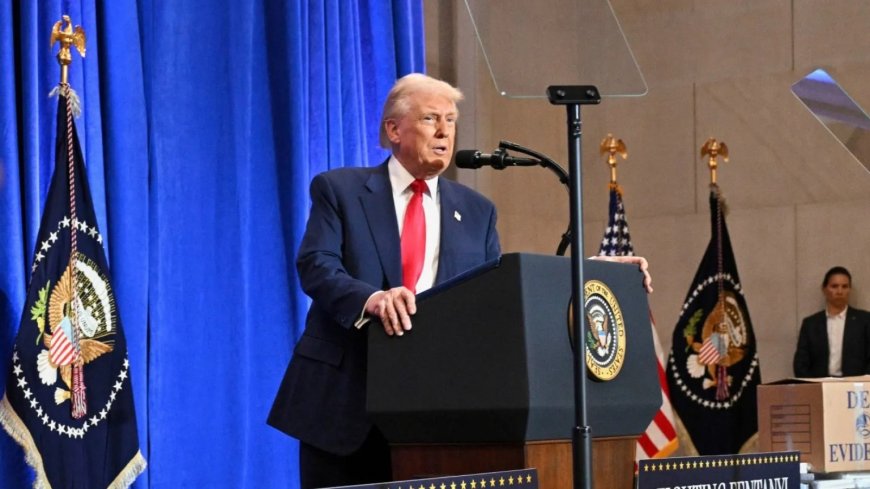
A federal judge has put the Justice Department on the spot: tell the court whether you actually plan to oppose President Trump’s $10 billion lawsuit against the I.R.S. or whether this whole thing is a legal staring contest.
The suit stems from the 2019 leak of Mr. Trump’s tax returns to The New York Times. He, his family business and two of his sons sued the I.R.S. in January, seeking at least $10 billion in damages and arguing the agency should have done more to prevent the disclosure. The wrinkle is that the president exerts unusually strong influence over the Justice Department, enough that a court is now worried the government and the president might not really be on opposite sides.
Judge Kathleen Williams of the Southern District of Florida ordered both the government and Mr. Trump’s lawyers to submit briefs explaining whether they are genuinely adversarial. The Constitution requires an actual dispute in federal court; if both sides are effectively on the same team, the case can be tossed out for lack of a real controversy.
So far, the courtroom has been oddly quiet on behalf of the government. No Justice Department lawyer has formally appeared in the case, and Mr. Trump’s lawyers even asked for more time to respond while indicating they’re talking with Justice Department lawyers about resolving the matter. The acting attorney general, Todd Blanche, declined to spell out how the department will proceed, saying only that the department handles complex issues like this all the time.
Legal experts point to additional practical hurdles for Mr. Trump. There are time limits for suing the I.R.S., and some former agency and Justice officials argue this suit was filed too late. The $10 billion demand also strikes many as oversized. And there’s the Littlejohn angle: the leak is tied to a contractor, not a direct I.R.S. employee, and in similar lawsuits the government has argued contractors shouldn’t automatically make the agency liable.
Even if the judge concludes there’s no legitimate dispute while Mr. Trump remains president and dismisses the case, that might not be the end. The Justice Department can still settle, and settlements are often paid from the Judgment Fund, a ready-made pot of public money that doesn’t require fresh congressional approval for each payment. Top Justice Department officials have authority over that fund, which adds another layer of eyebrow-raising logistics.
There are signs both sides are keeping the door open to a settlement: Mr. Trump’s lawyers told the court they’re in talks with Justice Department lawyers “designed to resolve this matter and to avoid protracted litigation.” Separately, Mr. Trump has pursued other money claims against the government, seeking hundreds of millions in private administrative filings. He has said any taxpayer money he might receive would go to charity.
The judge’s question is simple and constitutional: who exactly is fighting whom? That sounds like a legal Rorschach test with a $10 billion exclamation point, and until the Justice Department answers, the courtroom will have to wait for whether this is a real fight, a negotiated truce, or a lawsuit that evaporates faster than an embarrassed press aide’s calendar invite.
Closing line: In Washington these days, even a courtroom needs someone to confirm whether it’s a duel, a duet, or just very polite gaslighting, and the judge just asked the DOJ to stop humming and start answering.
What's Your Reaction?
 Like
0
Like
0
 Dislike
0
Dislike
0
 Love
0
Love
0
 Funny
0
Funny
0
 Angry
0
Angry
0
 Sad
0
Sad
0
 Wow
0
Wow
0