














































How Ukraine’s Drones Are Quietly Teaching Taiwan New Tricks, and New Headaches
An informal network is transferring Ukraine’s battlefield drone know-how to Taiwan, fixing military gaps while creating supply-chain, secrecy and production headaches.
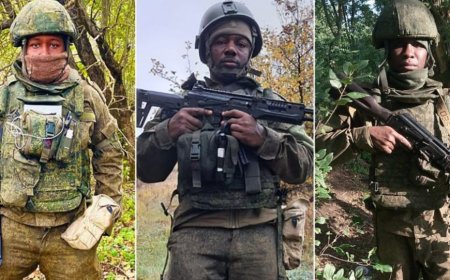
Lee used to deliver parcels in Taiwan, play video games and assume Chernobyl was a place you only visited in S.T.A.L.K.E.R. Now he pulls leave papers from a Kyiv coffee shop, pilots drones on the front and figures the experience will be handy “when the war happens one day with China.” He asked to be identified by only his first name, per military protocol.
That transformation, ordinary people, private firms and volunteer networks turning battlefield tech into practical know-how, is creating an informal bridge between Ukraine and Taiwan. There are no official diplomatic or military ties to smooth the transfer; instead, entrepreneurs, defense contractors and volunteers are swapping blueprints, battle stories and shipments of kit.
It’s a neat workaround until you notice the fine print. Ukraine’s drone industry relies on motors, batteries and other components made in China. Taiwan’s economy is deeply intertwined with China. Since 1992 Ukraine has formally observed the “One China” policy, and Taipei is cautious about doing anything that would invite Beijing’s ire given China’s close ties with Moscow. Wartime secrecy around certain technologies also makes technical study hard, Taiwanese officials say.
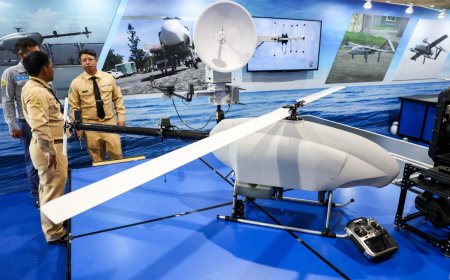
Tech is solving one problem and creating three new ones. First, the inventive Arsenal of flying, swimming and crawling robots that Ukraine uses to punch above its weight is a template Taiwan wants. Soldiers and reservists flood returning veterans with practical questions about jamming, evasion and countermeasures, sometimes basic and sometimes grimly inevitable: an exploding drone is hard to outrun.
Second, supply chains get awkward. China tightened direct sales to Ukraine after the invasion, so Ukrainian makers increasingly relied on parts that can still be bought in Taiwan. Taiwan has funneled thousands of drones into Eastern Europe, 70,372 to the Czech Republic and 31,711 to Poland in 2025, according to Samara Duerr, a national security analyst at the Research Institute for Democracy, Society and Emerging Technology, many of which eventually reached Ukraine via donations and charitable channels.
Third, the spread of know-how and production is hard to control. Ukrainian-designed drones are being marketed and built abroad: companies in Taiwan and elsewhere test and adapt battle-proven designs, and Ukrainian leaders fret that hardware alone can be exported without the command-and-control or training that makes it effective. President Volodymyr Zelensky has pushed for subscription-style deals, devices plus updates and remote pilots, to keep some leverage over how systems are used.
Private firms are blurring the lines between testing, sales and geopolitics. Taichung’s Thunder Tiger has sent drones to Ukraine for testing; Ukrainian entrepreneurs like Oleksandr Mashchenko repurposed wakeboard businesses into sea-drone makers and have been asked to think about Taiwan’s maritime needs; Neros is trialing 100 Ukraine-derived drones in Taiwan; Auterion signed cooperation with a Taiwanese research institution; and a Ukrainian start-up’s deal to license production in the United States has downstream buyers in Taiwan.
Ordinary Taiwanese are already changing habits. A project manager named Tina Hu read a civil-defense handbook that drew on Ukrainian experience, located her nearest shelter and packed go-bags. A Ukrainian drone pilot who vacationed in Taiwan was even invited to speak with Taiwan’s Foreign Affairs and National Defense Committee. The practical lesson is simple: technology can level mismatches in firepower, and then spawn supply-chain puzzles, secrecy headaches and a cottage industry of foreign factories.
Technology is building bridges where diplomacy won’t tread, but every clever drone that evens the odds arrives with a new customs form, a new question for an anxious reserve soldier, and the faint possibility of a production line popping up where no one expected it. That’s progress with assembly instructions, and a few missing screws.
What's Your Reaction?
 Like
0
Like
0
 Dislike
0
Dislike
0
 Love
0
Love
0
 Funny
0
Funny
0
 Angry
0
Angry
0
 Sad
0
Sad
0
 Wow
0
Wow
0