








































From Cells to Checks: Trump’s $1.776B Fund Has Jan. 6 Participants Doing the Math
The administration’s $1.776 billion Anti-Weaponization Fund, tied to an IRS settlement and following pardons for Jan. 6 defendants, has rioters hopeful for payouts, critics warning about incentives for political violence, and many unanswered questions about who will qualify and how claims will be
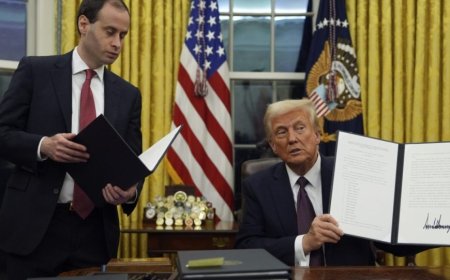
In a plot twist that reads like a political thriller with an accountant, the administration has created an "Anti-Weaponization" fund capped at $1.776 billion that could be used to compensate people who say they were mistreated by federal law enforcement, including some who were charged in the Jan. 6 attack on the Capitol.
Those who took part in the riot reacted with a mix of surprise, relief and practical curiosity. Some sounded vindicated that the federal government might now validate their claims of political targeting; others immediately started doing the math and dreaming up ways to spend any potential payout.
The fund grew out of a deal connected to the withdrawal of a lawsuit against the IRS and follows sweeping early actions of the administration: pardons or dropped charges for roughly 1,600 people indicted over Jan. 6 and a shake-up of the prosecutors and agents who built cases. Justice Department officials had debated the idea for months before it was finalized.
There’s also uncertainty about eligibility and process. The acting attorney general didn’t rule out that people who used violence during the riot could receive payments, and some prominent defendants described the rules as confusing. That ambiguity has left many wondering who actually qualifies, and whether checks could flow to people who assaulted police.
The fund isn’t aimed only at Jan. 6 defendants. The agreement specifically allows claims from others who say they were targeted for political or ideological reasons, everything from abortion protesters prosecuted under recent administrations to groups the IRS allegedly scrutinized unfairly. A number of Trump allies who faced investigations or prosecutions in recent years are obvious potential claimants.
Critics from both parties and extremism experts have pushed back. Some Republicans complain that the deal was negotiated behind closed doors and wasn’t filed with the judge overseeing the IRS case. Experts warn that compensating people who stormed the Capitol risks normalizing and financially rewarding political violence, a development they say could encourage further extremism.
For the moment the public is left with an awkwardly patriotic price tag and a flurry of hypothetical math: if the roughly 1,600 Jan. 6–related persons alone successfully split $1.776 billion evenly, the figure often cited is about $1.125 million each, a neat headline, but a badly simplified one, since many other claimants could dilute that total. Whether this fund becomes consolation, validation, or a new political flashpoint remains to be seen, but a small army of potential claimants already seems ready to line up and ask for their share.
In the end, the story isn’t just about payouts; it’s about whether money will be used to settle political scores, rewrite a fraught day in American history, or simply open a much bigger debate about how a nation compensates citizens who say they were wronged by their government. And if the past few weeks are any guide, the argument will come with spreadsheets, lawyers and a lot of very loud opinion.
What's Your Reaction?
 Like
0
Like
0
 Dislike
0
Dislike
0
 Love
0
Love
0
 Funny
0
Funny
0
 Angry
0
Angry
0
 Sad
0
Sad
0
 Wow
0
Wow
0