






















































Democrats Regret Giving Away the Maps as Courts and GOP Rewrite the Rules
After pushing independent redistricting commissions post-2017, Democrats are now reversing course as courts and Republicans accelerate aggressive mapmaking ahead of 2028.
Once upon a time in a post-2017 panic, Democrats decided the nice thing to do was hand redistricting to independent commissions, a civics-themed trust fall. Colorado, Michigan and Virginia adopted that approach, and older experiments in Washington and California already had the independent-commission vibe going.
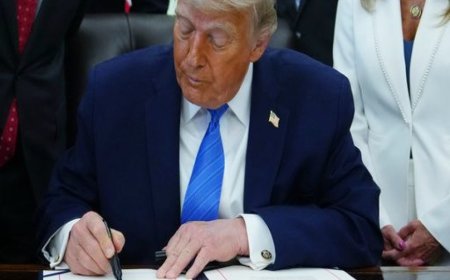
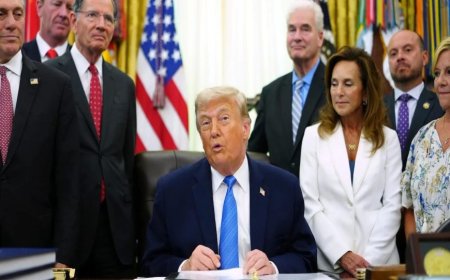
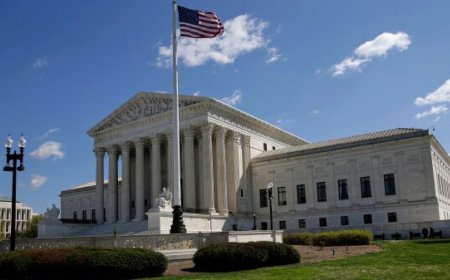
Fast-forward to now, and the trust fall feels like someone swapped the floor for a trampoline. A recent Supreme Court decision that further weakened the Voting Rights Act has opened the door to a fresh round of aggressive mapmaking, and Republicans, urged on at times by former President Trump, have been busy redrawing maps in states such as Texas, Missouri and North Carolina. Florida Republicans, meanwhile, passed a congressional map designed to flip four Democratic seats.
That push has turned eight-year-old good-government enthusiasm into buyer’s remorse. Blue-state Democrats who once celebrated taking redistricting out of partisan hands now find those same commissions can be infuriatingly slow, predictable or simply outmaneuvered when the other side decides to play by no rules at all.
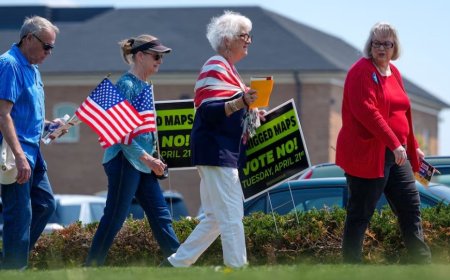
Political operatives and elected Democrats have begun trying to unwind their own handiwork. Voters in California and Virginia agreed to measures that hand some map power back, and in Colorado, where the 2018 referendum was once hailed as a rebalancing of power, the attorney general who supported the original change now backs a ballot initiative to undo it. Even Washington State’s long-standing commission could be on the chopping block if Democrats flip the legislature and decide to hand some control back to lawmakers.
The mood among Democrats ranges from weary to rueful. Some see this as a lesson in underestimated audacity: reforms that assume norms will hold up poorly against an opponent willing to ignore them. Others frame it as a predictable backlash, a partisan reaction to accountability at the ballot box, that requires an equally pragmatic response rather than idealistic purity.
Practical tweaks have been a recurring thread: several of the recent proposals that would reclaim mapmaking for legislators are explicitly temporary, set to expire after the 2030 census. That’s part acknowledgment that independent commissions felt principled and right at the time, and part strategic math, if map power can be regained briefly, maybe the partisan playing field can be leveled again before the next big census fight.
This is less a morality play than a courtroom farce: one side pitched a reform to make maps fair, the other side marched in with a briefcase full of aggressive redraws, and a high court just handed them new leverage. The lesson so far is blunt and unwelcome for idealists, fairness is a fine headline, but politics still rewards whoever is better at rewriting the lines. Until rules, courts and voters all agree on what “fair” looks like, expect more hasty reversals, uneasy compromises and map fights that feel like legal theater with stakes that don’t feel very theatrical at all.
What's Your Reaction?
 Like
0
Like
0
 Dislike
0
Dislike
0
 Love
0
Love
0
 Funny
0
Funny
0
 Angry
0
Angry
0
 Sad
0
Sad
0
 Wow
0
Wow
0